As an Amazon Associate, we earn from qualifying purchases. Some links on this site are affiliate links at no extra cost to you. Our recommendations are based on thorough research and editorial judgment.


The Science Behind Ice Formation and Why Sidewalks Get Slippery

Ice formation starts with nucleation, where water molecules cluster together. This can occur in both pure water and water with impurities. Sidewalks become slippery when water freezes, forming a smooth ice layer. Rapid cooling leads to smaller ice crystals, while slower freezing creates larger ones that can be hazardous. Moisture and temperature also influence ice thickness. Understanding these factors is essential for reducing slip hazards and maintaining safe surfaces during winter storms. More insights can be found below.
Key Takeaways
- Ice forms through nucleation, where water molecules cluster and create crystalline structures, leading to slippery conditions on surfaces like sidewalks.
- Supercooled water can remain liquid below freezing; disturbances can trigger sudden ice formation, increasing slipperiness.
- Higher humidity levels contribute to moisture accumulation on sidewalks, enhancing ice deposition and making surfaces treacherous.
- Cooling rates affect ice crystal size; rapid cooling produces smaller, more compact crystals, while slower cooling leads to larger, more dangerous formations.
- Injuries from slips on ice are common, particularly in freezing climates, emphasizing the importance of managing icy conditions on walkways.
The Basics of Ice Formation
Ice formation is a fascinating process that begins with nucleation. This initial step occurs when water molecules cluster together to create a crystal-like structure, serving as a seed for ice growth. Nucleation can be homogeneous in pure water or heterogeneous when initiated by impurities or surfaces. As water cools, it can become supercooled, remaining liquid below freezing due to a lack of nucleation points. As temperatures drop to the freezing point, water molecules form stable hydrogen bonds, creating an open hexagonal crystal structure. This unique arrangement causes ice expansion, making it less dense than liquid water. Consequently, ice floats. Understanding this process helps explain why sidewalks can become slippery when ice forms, creating potential hazards for pedestrians. Additionally, using pet-safe ice melts can help prevent icy conditions on sidewalks while being mindful of environmental impacts.
Recommended Products
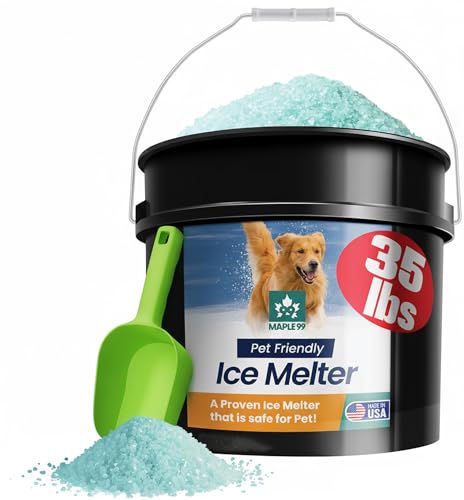
Professional Grade Performance - This powerful ice melting formula starts working instantly on contact with ice and snow. The medium grade solar salt ensures complete coverage and lasting results, making winter maintenance effortless and effective. In money-saving 35 lb pail.
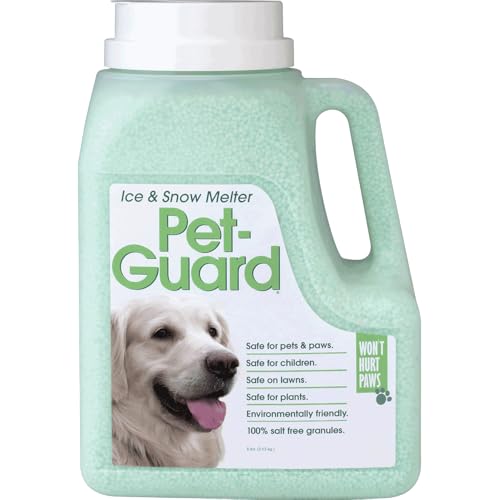
❄️Pet-Safe Formula – Designed to be safer for use around dogs, cats, and children than traditional rock salt when used as directed.

Fast-Acting Ice Melt: Effectively melts snow ice in temperatures as low as -2°F, ensuring clear driveways, sidewalk paths, and other surfaces for safer, hassle-free winter conditions.
The Latent Heat of Fusion

Phase changes in substances are critical for understanding their behavior, particularly when it comes to the latent heat of fusion. This concept refers to the energy required to convert a solid into a liquid or vice versa at a constant temperature. During phase changes, the temperature does not change until the state change is complete. For water, the latent heat of fusion is approximately 334 J/g, which illustrates how energy absorption converts ice to water when melting. Conversely, energy is released during freezing, which can contribute to icy conditions on sidewalks. Understanding these processes helps people anticipate how temperature fluctuations impact ice formation, ensuring safer navigation during colder months. This knowledge is essential for both daily life and various industrial applications, especially in contexts like foam sled durability where temperature changes can affect performance.
Freezing Mechanisms in Water

When temperatures drop, the unique properties of water come into play to create freezing mechanisms. Water molecules organize themselves through hydrogen bonding, forming ice crystals. The process begins with crystal nucleation, where impurities or nearby surfaces act as seeds for ice formation. As temperatures decrease, colder conditions lower the energy barrier to nucleation, making ice formation easier. This leads to various types of ice crystals with different densities and shapes, influenced by the surrounding temperature and pressure. As a crystal nucleus develops, ice expands through continuous hydrogen bonding, ultimately encompassing the entire volume of water. Understanding these mechanisms is vital for both everyday experiences and scientific applications related to freezing and ice formation. Proper management of ice melt products can significantly reduce slippery conditions on sidewalks during winter.
Supercooling Explained

Supercooling, a fascinating phenomenon, occurs when water drops below freezing without becoming solid. This happens due to the absence of nucleation sites necessary for ice to form. In pure water, temperatures can fall as low as −48.3 °C (−54.9 °F) without freezing. Understanding supercooling mechanisms reveals why water can remain in a liquid state despite freezing temperatures. Physical disturbances, such as shaking, can trigger immediate crystallization—this is known as the supercooling effect. Supercooled droplets in the atmosphere play a role in cloud formation and freezing rain, impacting weather conditions. Insight into supercooling helps explain icy sidewalks and can aid in various applications, from preserving biological tissues to improving ice management strategies during winter months. Lock deicers are often utilized to combat the effects of ice formation on surfaces like sidewalks.
The Role of Pressure in Ice Formation

Pressure plays a essential role in the complex processes of ice formation. It influences ice nucleation rates, the speed at which ice crystals begin to form. Negative pressure effects can elevate freezing thresholds, allowing ice to form under warmer conditions. Cavitation phenomena occur under high pressure, creating ideal sites for ice crystal growth. As pressure changes, ice experiences various phase alterations, shifting between solid and quasi-liquid states. These pressure-dependent characteristics are important in applications like food preservation, where controlled freezing can maintain quality. Overall, understanding how pressure affects ice formation helps explain why sidewalks may become slippery. When conditions shift, these dynamics play a significant role in the ice’s behavior and formation. Additionally, calcium chloride and magnesium chloride lower melting points, which can impact how ice forms under pressure.
Molecular Dynamics of Ice Crystallization
Understanding ice crystallization involves exploring the molecular dynamics that govern how ice forms. Through molecular simulations, scientists study how water molecules behave and interact during this process. These simulations reveal how external factors, like electric fields, can influence ice crystal dynamics. For example, electric fields might align water molecules to facilitate ice formation, reducing the energy required for crystallization. Additionally, the structure of water molecular clusters plays a critical role in determining how ice crystals grow. Factors such as cooling rates and surface roughness also impact ice formation. Together, these elements shape how quickly and efficiently ice crystals can develop, contributing to our understanding of everyday phenomena, such as slippery sidewalks during winter months. Preparing for cold weather emergencies often includes understanding how ice formation can affect safety in urban environments.
Nucleation: The Birth of Ice Crystals
Nucleation marks an essential stage in ice crystal formation. It begins when molecules in supercooled water cluster into nucleation sites. These sites help form tiny groups of ice embryos that mimic the crystal lattice of ice. For a cluster to grow, it must exceed a critical size; otherwise, it dissolves back into liquid. The presence of impurities or rough surfaces promotes this process by acting as templates. These factors lower the energy needed to create stable molecular alignment. When conditions are right, these ice embryos can grow into visible crystals. In nature, this process is influenced by factors like temperature and moisture, contributing to the slippery conditions often found on sidewalks during winter weather. Understanding the role of traction features in outdoor gear can help mitigate slipping hazards.
Heterogeneous vs. Homogeneous Nucleation
Ice crystal formation can result from different processes based on environmental conditions. Two main methods are heterogeneous and homogeneous nucleation. Homogeneous nucleation happens spontaneously in pure water droplets, typically near –40°C. It occurs when random molecular clusters form critical ice crystals without any impurities. In contrast, heterogeneous nucleation requires foreign particles, called ice nuclei, to facilitate ice formation at warmer temperatures, around 0°C to –35°C. This method is more common in nature. Ice nuclei greatly lower the energy barrier for the nucleation process, making it easier for ice crystals to form. As a result, water with impurities can freeze at temperatures as high as –5°C, highlighting the importance of these processes in ice formation and slippery sidewalks. Understanding the role of ergonomic features in tools like ice chippers can aid in efficient ice removal.
Structural Varieties of Ice
The various structural forms of ice reveal the incredible versatility of water molecules. Ice polymorphs demonstrate this diversity. The most common form, ice Ih, forms hexagonal structures found in snow and glaciers. This structure is less dense than liquid water, allowing ice to float. In contrast, ice Ic displays a cubic form found mainly in clouds. Other less common phases, like ice II to IX, form under extreme pressure and temperature conditions but return to ice Ih when normal conditions resume. Amorphous ice lacks the ordered structure of ice Ih, forming rapidly in space. Understanding these varieties and ice nucleation can help people appreciate the fascinating processes behind the ice they encounter daily. Additionally, the impact of temperature on ice formation plays a crucial role in determining the safety of outdoor surfaces during winter months.
Factors Influencing Ice Growth
Understanding how various factors influence ice growth is essential for traversing icy surfaces safely. Cold exposure plays a critical role; longer periods below freezing lead to increased ice thickness. Moisture sources like water vapor and liquid water also impact ice formation, affecting surface conditions markedly. High humidity enhances ice deposition, while snow cover can insulate and slow freezing beneath. Wind effects promote rapid cooling and can disrupt forming ice sheets, while water turbulence alters ice quality. Additionally, saline ice has a different freezing point than freshwater, often resulting in thinner layers. Factors such as these contribute collectively to ice stability, affecting how slippery surfaces become and guiding safe navigation during icy conditions. Understanding the optimal usage of ice melt spreaders can also help in preventing ice formation on sidewalks.
Recommended Products

ORGANIC PET & KID FRIENDLY ICE MELTER: Formulated with your pets & kids in mind, North Pro Paw is not only safe for your furry friends, but your family too! Safer for pets, NPP is an organic US Formula that is a safer solution for your family.

Strong * Durable * Easy to Use * Simply Pour Your Materials from the Larger Bag into the Screw Top Container and Spread as Much as You Like

GREAT ALL YEAR- Made from durable plastic, this hand-held seeder and spreader is a great portable and multifunctional tool to use anywhere and during any season! Effortlessly spread salt in the winter to deice your sidewalk and driveway, or fill it with grass seed to use as a seed spreader or use for fertilizer in the spring or summer!
The Cooling Rate and Its Effects
When temperatures drop rapidly, the cooling rate considerably affects ice formation and its properties. Faster cooling rates, exceeding 30°C per minute, can enhance ice nucleation and crystal formations. This can lead to smaller, more manageable ice crystals—which are vital in applications like cryopreservation, helping preserve biological samples. Conversely, slower cooling rates may result in larger and potentially damaging ice crystals. The structure and size of these crystals influence how water moves during freezing, impacting ice properties and formation. Understanding these cooling rates is essential not just in science but also for everyday concerns, like sidewalk safety during winter. Proper insight into these processes can aid communities in better managing icy conditions.
Recommended Products

Pair of robust traction cleats fit securely on any shoe or boot to reduce the risk of falls and increase safety when walking on snow and ice
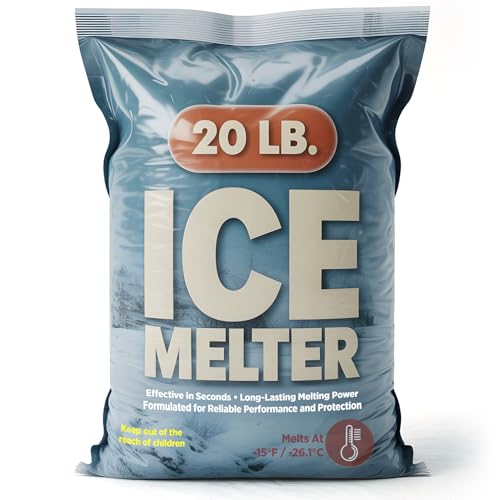
Environmental Consideration - This advanced formula is notably less corrosive to concrete than traditional ice melt. The environmentally conscious choice for responsible winter safety management. Apply 2-4 ounces per sq yrd

Fast Melting Power - This ice and snow melt works instantly, even in extreme cold down to -25°F, providing reliable traction and safer walking and driving surfaces within minutes of application.
Why Sidewalks Become Slippery
Icy sidewalks pose considerable risks for pedestrians, particularly in winter months. Sidewalks become slippery when temperatures fall below freezing, allowing moisture to freeze on contact. Black ice forms a nearly invisible layer that greatly reduces sidewalk traction, which many pedestrians do not see until it is too late. Snow and freezing rain create smooth, slippery surfaces that can be even more hazardous. Additionally, uneven ice layers can shift underfoot, increasing the risk of slips and falls. To enhance winter safety, it is essential for individuals to wear shoes designed for icy conditions and to be mindful of localized ice formation areas. Communities can promote traction by promptly clearing snow and applying grit or salt to affected sidewalks.
Recommended Products

GRIPS ON SLIPPERY SURFACES: Walk confidently with these slip-on traction cleats designed to evenly distribute underfoot traction across ice- and snow-covered surfaces, as to provide stability on rocky terrain.
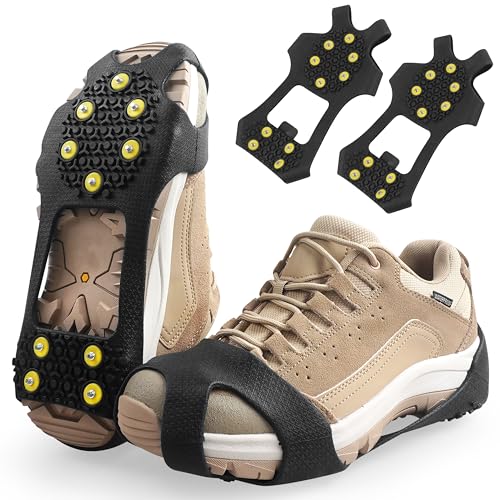
SIZE: S【Women(4-5.5)/Men(2.5-4)】,M【Women(6-8)/Men(4.5-6.5)】, L【Women(8.5-11)/Men(7-9.5)】, XL【Women(11.5-14)/Men(10-12.5)】, XXL【Women(14.5-17)/Men(13-15.5)】
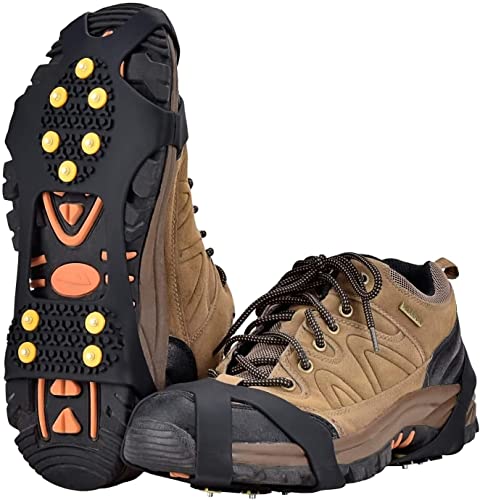
Size: L1[5.8*9 inch (US WOMEN:10-13/ US MEN:8-11)] **Fit for Men/Women,prevent slipping on snow and ice conditions,Anti Slip Crampons Slip-on Stretch Footwear
Practical Implications of Ice Formation
Ice formation not only affects the safety of sidewalks but also has broader implications for various environments and activities. Understanding ice dynamics enhances practical applications in fields like cryopreservation, where ice recrystallization inhibitors protect sensitive cells. For example, antifreeze proteins prevent damage during freezing, ensuring better recovery of tissues. Additionally, changes in ice cover on rivers impact water levels, which can affect flood risks. The thickness of ice on lakes also influences fish habitats and nutrient flow. Seasonal variations in ice can dictate how ecosystems respond during thaw cycles, making awareness essential for communities. By recognizing these practical implications, individuals and organizations can better prepare for winter challenges and protect their surroundings.
Recommended Products

7-INCH WELDED STEEL BLADE: Features a heavy-duty 7-inch forged steel head designed for high-impact scraping

Environmental Consideration - This advanced formula is notably less corrosive to concrete than traditional ice melt. The environmentally conscious choice for responsible winter safety management. Apply 2-4 ounces per sq yrd

Compact, lightweight spiked traction cleats for light walking on slippery surfaces; ideal for navigating icy sidewalks, driveways, and parking lots
Statistics on Ice and Winter Hazards
Every winter, a significant number of injuries and accidents occur due to icy conditions. Ice fall statistics indicate that emergency department visits for falls on snow or ice reach 13.1 per 10,000. Rates are three times higher in freezing states. Wrist fractures dominate these injuries, particularly among those aged 65 and under 18. Additionally, winter injury trends show that falls happen during everyday activities, not just recreational ones. Occupational warnings note over 20,000 injuries reported in 2017 related to slips on ice and snow. With annual costs surpassing $50 billion in medical expenses, taking preventive measures like wearing sturdy shoes and salting walkways is essential. Awareness can enhance safety during these chilly months, promoting a safer community experience.
Frequently Asked Questions
How Does Climate Change Impact Ice Formation in Lakes?
Climate change disrupts ice formation in lakes, altering climate patterns and threatening ecological balance. As warmer temperatures lead to reduced ice cover and earlier ice-off dates, both aquatic life and regional communities face significant challenges.
What Is the Historical Significance of Ice in Nature?
Ice symbolized resilience through ice ages, shaping ancient ecosystems and communities. It preserved life forms, influenced migrations, and transformed landscapes, offering humanity a profound connection to the planet’s history and the delicate balance of its environments.
How Is Ice Thickness Measured in Lakes and Rivers?
Ice thickness in lakes and rivers is measured using various techniques, including manual methods with measuring tapes and ice chisels, along with thickness monitoring devices like Ground Penetrating Radar and satellite altimetry for enhanced accuracy.
Can Ice Formation in Urban Environments Affect Local Wildlife?
Ice formation in urban habitats considerably shapes wildlife adaptation, as ice melt triggers habitat disruption. These changes challenge local species, prompting shifts in foraging patterns and movement dynamics, ultimately affecting biodiversity and ecological balance in cities.
What Are Some Common Myths About Ice and Freezing?
Common ice myths include the notion that warmer water freezes faster, that ice is always sanitary, and that contaminants can’t survive in ice. These freezing misconceptions highlight the importance of understanding ice’s complex nature and safety.


