As an Amazon Associate, we earn from qualifying purchases. Some links on this site are affiliate links at no extra cost to you. Our recommendations are based on thorough research and editorial judgment.


How Weather Temperature Affects Snow Blower Performance

Weather temperature greatly impacts snow blower performance. Cold temperatures can cause engine oil to thicken, making it harder to start. In contrast, warm conditions can lead to overheating, especially in non-adjustable carburetors. Snow density affects how effectively a snow blower clears snow. More power is needed for dense, heavy snow, while light snow requires faster speeds for efficiency. Choosing the right snow blower, like a two-stage model for moderate snow, can enhance performance. There are more tips to think about for ideal functioning.
Key Takeaways
- Cold weather causes oil to thicken, affecting engine performance and starting difficulties in snow blowers.
- Warm temperatures can lead to gasoline evaporation, causing starting issues and potential engine overheating.
- High-density snow requires more power to clear, affecting performance based on temperature and snow conditions.
- Adjusting the clearing height and throttle helps optimize performance in varying temperatures and snow types.
- Regular maintenance practices, including fuel management, are crucial for ensuring reliable operation in extreme weather.
The Impact of Cold Temperatures on Engine Performance
When temperatures drop, engine performance can be greatly affected. Cold starts challenge snow blower engines, as the thickening oil raises resistance during startup. The viscosity of engine oil increases in low temperatures, hindering the oil’s ability to flow smoothly. Spark plugs also face efficiency issues in cold weather, especially if they are worn or dirty. Gasoline can thicken or evaporate, leading to possible starting difficulties. Moreover, the denser cold air can disrupt the air-fuel mixture, causing potential power loss. To improve cold-weather performance, consider using winter-grade or synthetic oil. These types enhance lubrication and protect against damage. Regular maintenance of the fuel system and engine components helps guarantee reliable operation during cold conditions. Additionally, using engine block heaters can significantly improve starting efficiency by keeping the engine warm during extreme cold spells.
Understanding Warm Weather Effects on Snow Blowers
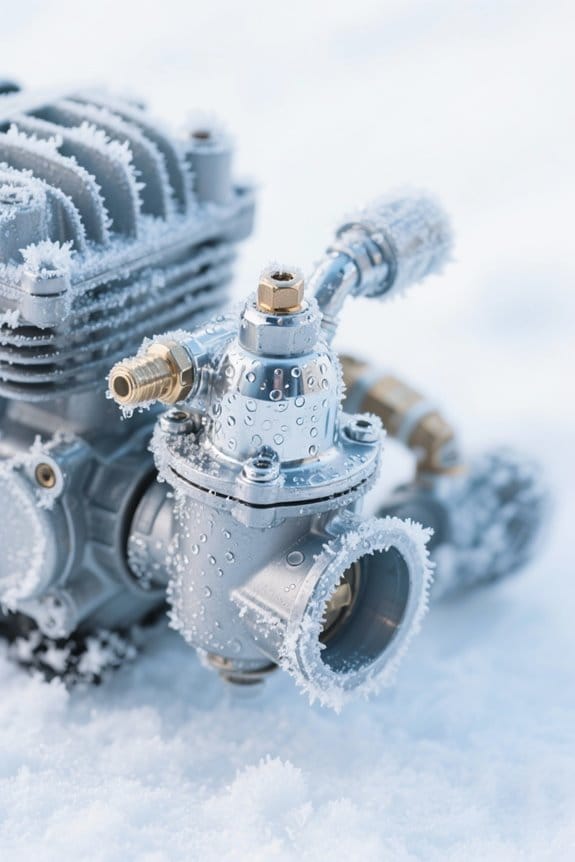
Low temperatures can greatly challenge snow blower performance, but warm weather brings its own set of obstacles. Snow blowers not equipped with adjustable carburetors can struggle to operate smoothly as the temperature rises above freezing. Engine modifications may be necessary to guarantee proper fuel atomization and prevent stalls. User experiences indicate that running for extended periods in warm conditions can lead to overheating and engine wear. Additionally, untreated fuel can degrade, risking costly repairs after storage. Regular maintenance, such as draining gasoline and using fuel stabilizers, is critical. Inspections before the warm season can help maintain ideal performance. Awareness of these factors keeps snow blowers ready for winter use, assuring reliable operation when needed most. Furthermore, using variable speed augers can enhance performance in varying snow conditions, adapting effectively to changes in weather.
The Role of Snow Density in Clearing Efficiency

Snow density plays an essential role in the efficiency of snow blowers during winter operations. Different snow types, especially high-density snow, require more power from the machine. This increased resistance challenges the auger and impeller, which can lead to overheating if the engine isn’t powerful enough. Dense snow accumulation particularly affects throwing distance, leading to slower clearing times. Users may need to adjust chute heights and speeds to optimize performance. Investing in a snow blower with reinforced components can help mitigate wear and tear under these conditions. Regular maintenance, including lubrication, is vital to keep machines running smoothly. Understanding snow density helps users stay prepared, ensuring efficient snow removal and longer-lasting equipment. Additionally, selecting a model with ergonomic designs can enhance user comfort and reduce fatigue during prolonged use.
Performance Challenges With Light Snow Conditions

Many users encounter unique performance challenges when clearing light snow conditions. Light snow can easily drift due to wind, complicating effective snow dispersal. To optimize snow removal, operators should adjust their snow blower speed. Faster speeds enhance efficiency and coverage on light, powdery snow, while slower settings may reduce productivity. Single-stage snow blowers, like those priced around $300 to $500, excel in light snow scenarios, as they are lightweight and versatile. Especially, battery-powered models offer convenience for quick jobs. Maintenance remains essential; regular cleaning prevents clogs and improves performance. Understanding these factors helps users navigate the specific challenges of light snow conditions, ensuring a smoother snow clearing experience for everyone involved in maintaining their properties. Additionally, being aware of moisture-wicking fabric can help operators stay comfortable during prolonged snow removal sessions.
Handling Wet and Heavy Snow: Key Considerations

Clearing snow in heavy and wet conditions presents different challenges compared to light, powdery snow. For best results, two-stage snow blowers are preferred due to their robust design and powerful engines. Gas-powered models excel in these tough conditions, providing the necessary power to handle wet snow’s added weight. Operating techniques matter too; moving at a slow and steady pace helps prevent clogging. Regularly clearing the chute is essential to maintain efficient operation. It’s also wise to divide the workload into multiple passes to manage depth effectively. Overall, choosing the right snow blower design tailored for wet snow guarantees improved performance and easier handling during winter storms, making snowy days less intimidating. Additionally, considering ergonomic designs can help reduce physical strain while operating snow removal equipment.
Navigating Icy Conditions and Their Challenges
Icy conditions can present significant challenges for homeowners trying to maintain their driveways and walkways. Clearing icy surfaces requires powerful equipment, as compacted snow demands extra auger and impeller strength. This highlights the significance of having a reliable multi-stage snow blower, designed for hard conditions. Traction challenges increase in these circumstances, so using tire chains or traction enhancers is recommended to prevent slipping. Regular maintenance is essential; clearing ice buildup after each use helps guarantee smooth operation and aids in blockage prevention. Homeowners should inspect metal parts for corrosion, especially if exposed to salt and moisture. Taking these steps will improve performance and prolong the life of the snow blower when tackling winter’s icy challenges. Additionally, understanding safety features like slip-resistant outsoles can ensure you are well-equipped for safe operation in slippery conditions.
Terrain and Surface Conditions That Affect Performance
Terrain and surface conditions play a crucial role in snow blower performance. Factors like terrain slope and surface texture greatly influence the effectiveness of snow removal tools. On larger properties, two-stage or three-stage snow blowers are ideal for managing deep snow on wide, paved, or gravel driveways. These machines can handle rough terrains, preventing damage while clearing snow. For uneven surfaces, heavy-duty models with adjustable skid shoes guarantee minimal scraping. The steepness of slopes can reduce stability, so selecting a blower with strong traction control is critical. Wet, dense snow will require slower speeds, making it necessary to match the snow blower’s horsepower to the specific terrain conditions. Proper selection leads to a smoother and more efficient snow clearing experience. Regular maintenance, such as checking augur belt condition, ensures optimal performance during varying weather conditions.
Importance of Proper Maintenance in Cold Weather
Maintaining snow blowers during cold weather is essential for their reliability and performance. Proper maintenance includes following Maintenance Checklists that detail necessary inspections, such as checking belts and augers for wear. Winter Lubrication is significant; using winter-grade lubricants guarantees better operation by preventing parts from freezing. It’s also imperative to check the fuel system, replacing old fuel and adding stabilizers to prevent engine problems. Regularly inspecting spark plugs and air filters enhances efficiency. Additionally, storing snow blowers in dry places protects against rust. These proactive steps not only extend equipment life but also reduce repair costs. By committing to routine maintenance, users can enjoy consistent performance and a safer snow removal experience throughout the winter months. Using winter-grade lubricants can significantly enhance the snow blower’s performance by preventing clogs and ensuring smooth operation in harsh conditions.
Adjusting Snow Blower Features for Extreme Conditions
When heavy snowfalls occur, adjusting snow blower features is essential for greatest performance. Users should make critical snow blower adjustments to operate effectively in cold weather settings. Setting the throttle to three-quarter speed or higher enhances performance in lower temperatures. Adjusting the clearing height allows for proper handling of thick snow while preventing blockages. For optimum performance, snow blower operators should take advantage of adjustable speeds according to snow conditions. Electric start systems can simplify starting in extreme cold, and using synthetic oil helps engines perform better. Each of these features plays an essential role in ensuring that snow blowers can tackle severe weather efficiently, keeping communities accessible and safe during winter storms. Additionally, considering the heat output levels of heated handles can significantly improve comfort during prolonged use in cold conditions.
Choosing the Right Snow Blower for Your Region
Choosing the right snow blower for a specific location can greatly impact effectiveness during winter months. Regions with light snowfall benefit from single-stage snow blower technology, ideal for easy maneuverability. In contrast, moderate to heavy snowfall areas require two-stage models capable of handling deeper, wetter snow. For extreme conditions, three-stage snow blowers excel in breaking up compacted ice, perfect for northern or mountainous regions. Buyers should consider local snowfall patterns and their property’s size. Small driveways work well with single-stage options, while larger spaces suit two-stage or even three-stage units. Reliable brands like Husqvarna offer versatile snow blowers priced from $600 to $1,500, ensuring effective performance tailored to specific needs and environments. Additionally, investing in durable materials is crucial for enhancing the longevity and reliability of snow blower belts, which can significantly affect overall performance in winter maintenance.
Seasonal Maintenance Practices for Optimal Performance
Proper seasonal maintenance guarantees snow blowers perform efficiently throughout winter. Adopting a thorough maintenance checklist guarantees snow blower longevity. Start by washing and drying the unit to prevent corrosion. During storage, fill the tank with fresh fuel and run the engine briefly. Change the oil annually, and remember to lubricate moving parts to keep everything in working order. Inspect tires, belts, and spark plugs regularly to confirm they are functioning well. By checking fasteners and replacing worn augers, operators enhance performance. Finally, maintain a record of all completed tasks to better prepare for future winters. Following these practices leads to a reliable snow blower, making winter chores easier for everyone involved.
Fuel System Management in Any Temperature
Snow blowers require careful fuel management in any temperature to guarantee reliable performance during winter months. Proper fuel preservation starts with avoiding gasoline that contains more than 10% ethanol. This choice helps prevent corrosion and moisture issues. Storing gasoline in clean, sealed containers away from sunlight is essential to minimize degradation. When winter approaches, completely draining the fuel system ascertains moisture is removed, preventing engine damage. It’s wise to fill the tank immediately after running the engine dry to limit air exposure. Regular inspection of fuel lines also aids in moisture management and maintains fuel quality. Using low-ethanol fuels can reduce the risk of water attraction, fostering smoother operation and longer-lasting performance during snowy conditions.
The Advantages of Two-Stage and Three-Stage Blowers
Which type of snow blower is best for a homeowner? For many, a two-stage blower is ideal due to its maneuverability and cost-effectiveness. These snow blower types can handle snow up to 16 inches deep and effectively throw it 35 feet, making them great for residential driveways and sidewalks. However, for those with larger areas or heavier snow conditions, a three-stage blower may be more suitable. These models clear snow 50% faster and can handle depths of 18 inches or more. A performance comparison shows that three-stage models offer superior traction on uneven terrain and enhanced features. Ultimately, the choice depends on individual needs and conditions, ensuring homeowners select the right tool for winter challenges.
Frequently Asked Questions
How Do Blizzard Conditions Impact Snow Blower Performance?
Blizzard conditions greatly impact snow blower performance, with two-stage models capable of clearing up to 50% more snow per pass during high blizzard intensity and heavy snow accumulation, ensuring effective snow removal for communities alike.
Can I Use a Snow Blower in Freezing Rain?
Using a snow blower in freezing rain poses significant risks due to freezing rain effects, highlighting snow blower limitations. Ice accumulation can lead to jamming and damage, making manual removal or alternative methods more advisable for safety.
What Safety Gear Should I Wear While Operating a Snow Blower?
When operating a snow blower, it’s essential to wear insulated gloves and safety goggles to guarantee protection. Staying safe while clearing snow is key—better to be safe than sorry when facing winter’s challenges together.
How Can I Prevent Snow From Sticking to My Snow Blower?
To prevent snow from sticking to a snow blower, users should employ anti-stick solutions like specialized sprays or car wax, ensuring regular maintenance by applying these effective treatments to the chute and auger for peak performance.
What Time of Day Is Best for Snow Blowing?
The ideal timing for snow blowing is early morning, when fresh snow accumulation is untouched, fostering a serene environment that promotes community harmony. This guarantees smooth operation while enhancing neighborhood camaraderie during winter’s enchanting hush.


