As an Amazon Associate, we earn from qualifying purchases. Some links on this site are affiliate links at no extra cost to you. Our recommendations are based on thorough research and editorial judgment.

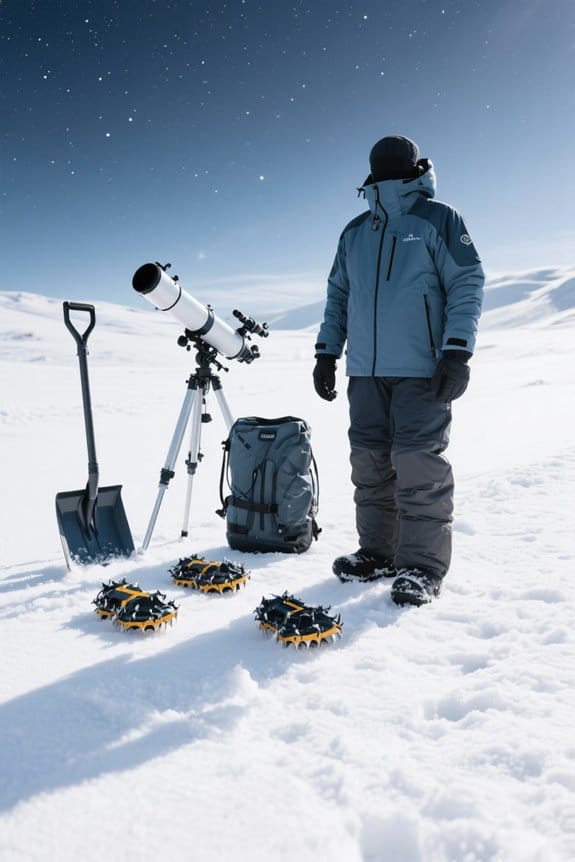
Winter Stargazing: Why Cold Weather Offers the Clearest Skies

Cold winter air holds less moisture, which leads to clearer skies ideal for stargazing. High-pressure systems common in winter suppress cloud formation, improving visibility. Longer nights provide up to 15 hours of darkness, enhancing viewing opportunities. Notable constellations like Orion and deep-sky objects such as the Orion Nebula are easily visible. Proper gear, such as insulated boots and thermal layers, guarantees comfort. Understanding forecasts can help optimize stargazing conditions for an unforgettable experience. More details await.
Key Takeaways
- Cold air contains less moisture, leading to lower humidity and clearer skies for optimal stargazing conditions during winter months.
- High-pressure systems typical in winter suppress cloud formation, resulting in stable weather and improved visibility for celestial observations.
- Longer winter nights offer extended darkness, enhancing visibility and reducing light pollution from urban areas and indoor activities.
- Bright constellations and deep-sky objects are more easily observed during winter, including Orion, the Pleiades, and the Andromeda Galaxy.
- Proper gear and planned observations, including monitoring lunar phases, can significantly enhance the winter stargazing experience.
Cold Air and Its Impact on Atmospheric Moisture
Cold air greatly impacts atmospheric moisture, especially during winter months. The capacity of cold air to hold moisture is considerably lower than in warmer conditions. For instance, air at 0°C can only hold about 0.5% water vapor, whereas at 30°C, this capacity skyrockets to roughly 3%. This limitation results in lower absolute humidity during winter. Even when cold air reaches high relative humidity, its actual moisture content remains minimal. As cold air sinks and contracts, it can create high-pressure zones that suppress moisture transport. This hampers cloud formation, leading to clearer skies perfect for stargazing. Understanding the relationship between cold air and moisture capacity enhances awareness of winter’s unique atmospheric qualities, making cold nights more inviting for sky enthusiasts. Additionally, incorporating emergency warmth solutions in your winter survival kit can further enhance your outdoor enjoyment during chilly nights.
The Advantage of Longer Winter Nights

The winter months feature longer nights that provide a significant advantage for stargazers. With the winter solstice offering about 15 hours of darkness, families can enjoy nature and observe celestial events together. Early sunsets, around 4:19 PM, allow skywatching to begin by 6 PM. This extended darkness enhances visibility, reduces competition from surrounding light, and opens multiple opportunities for observing fascinating meteor showers. Since many people stay indoors during colder months, light pollution diminishes, making remote stargazing sites ideal. Families looking to bond can take advantage of the inviting night sky. Overall, longer winter nights present wonderful opportunities for unforgettable family outings under the stars, fostering a sense of connection to each other and the universe. Additionally, ensuring proper footwear insulation can keep stargazers comfortable while enjoying the chilly night air.
Bright Winter Constellations to Observe

What bright winter constellations can stargazers identify during the chilly months? In the crisp winter skies, Orion stands out prominently. Its features include the three bright stars of Orion’s Belt, making it an easy and delightful guide for observers. Nearby, Taurus highlights the V-shaped Hyades cluster and the brilliant red giant Aldebaran, inviting admiration from all who gaze upon it. The Pleiades cluster, also known as the Seven Sisters, rests within Taurus, adding to its charm. Constellations like Canis Major and Canis Minor boast stars such as Sirius, the brightest in the night sky, and Procyon, another dazzling point of light. Together, these constellations make winter stargazing an enchanting experience for everyone, fostering a sense of connection to the universe. Wearing suitable gear like snow gaiters can enhance comfort during outdoor observations in cold weather.
Recommended Products

Our 16.5-inch tall gaiters create an impenetrable shield against snow, mud, and debris with 600D waterproof oxford fabric

Waterproof & Breathable Technology: Powered by state-of-the-art TEMRES technology, these winter gloves provide a 100% liquid-proof seal while allowing moisture and heat to escape. Keep your hands bone-dry and sweat-free during high-intensity outdoor work or winter sports.
Prominent Deep-Sky Objects During Winter

During winter nights, the sky transforms into a canvas filled with stunning deep-sky objects. Stargazers can explore the Orion Nebula, a bright star-forming region visible in Orion. Nearby, the Crab Nebula offers rich details and serves as a famous supernova remnant. The Rosette Nebula lies in Monoceros and showcases beautiful star formation, perfect for astronomical photography. The Pleiades Cluster shines brightly, while the Double Cluster in Perseus provides fascinating views of multiple stars. Less commonly known, the Jellyfish Nebula and Witch Head Nebula also beckon for exploration. Finally, winter galaxies like the Andromeda Galaxy remind viewers of the vastness beyond. These targets make winter a prime time for deep-sky observation and discovery. Additionally, ensuring proper sun protection ratings for your gear can enhance your stargazing experience, especially during prolonged outdoor exposure.
Enhanced Atmospheric Stability for Better Seeing

Often, winter provides stargazers with some of the best atmospheric conditions for observation. The cold air of winter holds less moisture, leading to clearer skies. This reduced atmospheric moisture means less light scattering, resulting in sharper views of stars and celestial objects. High-pressure systems, common in winter, create stable weather, further improving visibility. These conditions minimize thermal currents and turbulence, which often blur star images. With fewer jet streams causing instability, views are steadier, allowing for better focus through telescopes. The combination of calm nights and low atmospheric pressure enhances the experience. Stargazers can delight in the clarity that winter offers, making it an ideal time for deep-sky observation and exploration of distant celestial wonders. Additionally, using adjustable snowshoe poles can enhance your outdoor experience by providing stability while stargazing in winter’s rugged terrain.
Geographic Variations in Stargazing Opportunities
While many assume that stargazing opportunities are similar everywhere, considerable geographic variations exist. Remote deserts and high-altitude regions, such as the Atacama Desert in Chile and Mauna Kea in Hawaii, provide ideal locations for clear skies. These areas benefit from low light pollution, dry air, and high elevation, enhancing visibility. Additionally, equatorial locations like the Canary Islands offer views of both celestial hemispheres, while Arctic regions surprise with unique polar constellations. International Dark Sky Reserves, such as Namibia’s NamibRand Nature Reserve, legally protect these dark areas, ensuring stunning night sky experiences. For avid stargazers, exploring different geographic areas can greatly impact their stargazing enjoyment and opportunities to connect with the universe. Moreover, energy efficiency measures taken in homes can also enhance indoor stargazing experiences by reducing light pollution from within urban areas.
Local Weather Patterns and Their Influence
Geographic variations in stargazing are not solely determined by location; local weather patterns play a significant role as well. Local climate variations, especially during the winter, can dramatically impact sky clarity. Cold front dynamics bring in arctic air masses, which are dry and free of particulates. This results in clearer skies that reveal dim stars and faint celestial objects often hidden in summer haze. Additionally, stable atmospheric conditions commonly seen in winter reduce turbulence, improving the sharpness of the stars. High-pressure systems can further limit cloud cover, enhancing visibility. For those passionate about stargazing, understanding these local weather influences can provide insights into the best times for skywatching and deeper enjoyment of the celestial wonders above. Having a winter survival kit on hand is beneficial for any outdoor stargazing adventure.
Preparing for Cold Weather Stargazing
To enjoy stargazing during cold winter nights, preparation is essential for comfort and safety. Effective stargazers prioritize layering essentials to maximize heat retention. Start with moisture-wicking base layers made of merino wool or synthetic fabric. Add insulating mid-layers, like a synthetic sweater, topped with a windproof outer shell. Warm footwear is vital; choose insulated, waterproof boots and double-layered wool socks. Fingerless gloves provide dexterity, while mittens can offer warmth during breaks. Don’t overlook head coverings—beanies or scarves help retain heat. Additionally, using hand and foot warmers can greatly increase comfort. Bring thermal blankets or picnic blankets for extra coziness when stationary. These simple strategies will enhance the stargazing experience, making long winter nights more enjoyable and memorable. Consider opting for high-quality materials that resist pilling and ensure cushioning to prevent blisters.
Overcoming Observing Challenges in Winter
Many stargazers encounter unique challenges during winter observations. To avoid disturbances from tube currents, it is vital to allow the telescope to reach thermal equilibrium. Waiting about an hour after setting up helps mitigate warm air inside the tube. Additionally, using a small battery-powered fan can quicker equalize the temperature. Good seeing conditions are essential for clear views, particularly of planets and double stars. Choose cold nights with low wind for the best stability. Also, dressing in multiple layers can keep warm and comfortable while limiting exposure. Managing dew and frost with dew heaters or covers is key for protecting equipment. By addressing these challenges, winter stargazers can enjoy the beauty of the night sky more fully. Additionally, ensuring that your equipment is protected with weather-resistant accessories can help prevent damage during cold conditions.
Importance of Cloud Cover Forecasts
How can cloud cover forecasts enhance stargazing experiences? Cloud cover forecasts play an essential role for enthusiasts keen to observe the night sky. Accurate predictions help astronomers plan their setups effectively. Without clear skies, clouds can completely obscure celestial objects, making observation impossible. These forecasts utilize forecasting tools like satellites and weather models, enhancing reliability. Recognizing cloud types, such as thin high clouds or potential storm-inducing cumulonimbus, allows stargazers to gauge the best conditions. By monitoring cloud cover, they minimize wasted time and prevent equipment exposure to unexpected weather. Therefore, embracing advanced forecasting tools can greatly improve not only the efficiency of stargazing but also the overall enjoyment of the breathtaking cosmic displays that await in the clear night sky. Additionally, wearing suitable thermal base layers with moisture-wicking properties can help keep stargazers warm and comfortable during long hours of observation in cold weather.
Choosing the Right Time for Observation
When is the ideal time for stargazing? Choosing to observe during the new Moon phase is key. This timing strategy maximizes visibility by eliminating interference from moonlight. Nights surrounding a new Moon provide clear skies, perfect for spotting thousands of stars. For the best results, wait until full darkness sets in, ideally close to midnight when the sky is darkest. Winter brings longer nights with colder air, enhancing visibility. Additionally, selecting dates based on lunar cycles and specific celestial events—like meteor showers—allows for enriched experiences. For prime conditions, find locations away from artificial light pollution. Planning trips with a dark sky calendar can elevate your stargazing adventures considerably.
Recommended Products

[STAY ORGANIZED ALL YEAR] July 2026 - June 2027 professional day planner with 12 months of monthly and weekly pages for easy academic planning and scheduling; 2 additional monthly pages (May 2026 - June 2026) are included

[STAY ORGANIZED ALL YEAR] July 2026 - June 2027 professional day planner with 12 months of monthly and weekly pages for easy academic planning and scheduling; 2 additional monthly pages (May 2026 - June 2026) are included

[STAY ORGANIZED ALL YEAR] July 2026-June 2028 day planner with 24 months of monthly pages for easy academic planning and scheduling. Hole punched for easy binder placement
Frequently Asked Questions
What Are the Best Winter Months for Stargazing?
The best months for winter skywatching are December to February, when celestial events shine brightest, offering longer nights for stargazers to share whispers of wonder beneath the expansive, pristine sky, drawing them closer together.
How Does Light Pollution Affect Winter Sky Visibility?
Light pollution markedly hinders winter sky visibility, particularly in urban settings. Its brightness erases stars from view and diminishes urban astronomy experiences, making it challenging for communities to connect with the night sky during colder months.
Can I Stargaze Effectively Using Binoculars Instead of a Telescope?
Yes, binoculars provide significant advantages for stargazing, offering ease of use and portability. Effective stargazing techniques enhance the experience, allowing observers to appreciate constellations and celestial objects together, fostering a sense of community and shared wonder.
What Clothing Is Best for Comfort During Winter Observing?
For comfort during winter observing, effective layering techniques paired with thermal accessories like insulated hats, gloves, and boots create warmth. Choosing breathable, moisture-wicking materials guarantees a cozy experience while enjoying the wonders of the night sky together.
Are There Winter Meteor Showers to Watch For?
Amid winter meteor phenomena, enthusiasts can watch the Geminids, Ursids, and Quadrantids. Observing tips include finding dark skies, dressing warmly, and timing views around moon phases to enhance the shimmering celestial displays above.


