As an Amazon Associate, we earn from qualifying purchases. Some links on this site are affiliate links at no extra cost to you. Our recommendations are based on thorough research and editorial judgment.


How to Safely Remove Snow From Your Roof Without Climbing

To safely remove snow from a roof without climbing, use a roof rake to pull snow from the edge while standing on the ground. Start at the bottom and work in sections, leaving 1-2 inches to protect shingles. Consider investing in a roof shovel with a plastic blade to prevent roof damage. For heavy accumulations, a snow blower can help. Additional insights on effective techniques and safety measures can enhance your approach to this important task.
Key Takeaways
- Use a roof rake to remove snow from the ground, preventing the risk of falls.
- Work in small sections, starting from the bottom and leaving 1-2 inches of snow.
- Apply roof-safe ice melt products to help manage snow and prevent ice dams.
- Wear non-slip footwear for traction, minimizing the risk of slips during removal.
- Regularly inspect your roof and snow removal equipment to ensure everything is functioning properly.
Understanding the Risks of Roof Snow Accumulation
Snow accumulation on roofs poses significant risks that homeowners should understand. Different roof designs handle snow weight differently. Most residential roofs can support up to 30 pounds per square foot. However, heavy, wet snow can quickly surpass this limit, leading to potential roof collapse. Unbalanced snow loads, such as drifting, pose additional threats, as they can double the local weight on specific roof areas. Moreover, flat and low-slope roofs retain snow longer, increasing vulnerability. Hidden stresses, such as lifting shingles and rotting decking, may weaken the roof over time, even without visible damage. Cumulative damage from repeated snow accumulation can compromise roofing materials and structures. Awareness of these risks is essential for safeguarding homes against winter weather challenges, and utilizing roof heating cables can be an effective solution to prevent ice dams and reduce snow load.
Essential Tools for Safe Snow Removal

When it comes to removing snow from roofs safely, choosing the right tools is essential for effective and secure snow management. Snow rakes are greatly helpful; with long handles, they pull snow from the ground, reducing the risk of climbing. Collapsible snow shovels are lightweight and ideal for close snow shifting. Roof shovels with plastic blades crack ice dams while protecting roofing materials. Premium roof rakes facilitate smooth snow removal with ease. Installing electric heating systems can prevent heavy accumulation altogether, serving as a proactive roof maintenance essential. Remember, ergonomic handles and lightweight materials enhance safety and comfort during snow removal techniques, ensuring a responsible approach to winter care for every homeowner. Additionally, having essential tools in your car emergency kit can significantly improve your safety during winter weather conditions.
Techniques for Effective Roof Snow Clearance

Effective roof snow clearance requires careful techniques to guarantee safety and protect roofing materials. Using a roof rake, homeowners can stand safely on the ground while removing snow from the roof’s edge. It’s best to work in small sections, starting from the bottom and moving up. To prevent damage to shingles, use soft-edged tools. It’s wise to leave 1-2 inches of snow to avoid scraping that may harm the roof. After snow removal, applying roof-safe ice melt products helps prevent ice dams and buildup. Regularly monitor the effectiveness of these products during cold spells. For heavy accumulations, consider a roof snow blower designed for the job, ensuring proper use to maintain roof integrity throughout the snow removal process. Additionally, using a roof rake with non-abrasive materials helps protect metal roof surfaces during snow removal.
Safety Precautions When Removing Snow
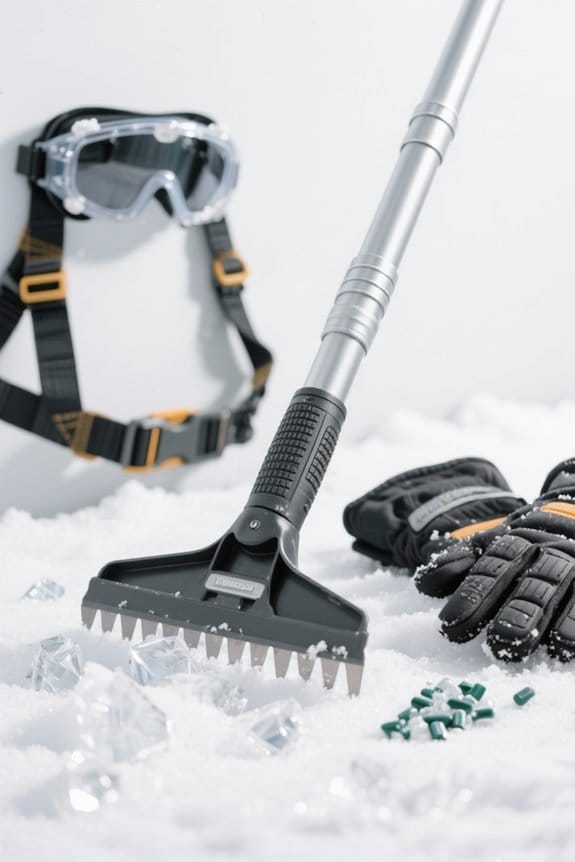
Ensuring safety during snow removal is essential for both the worker and the property. Before starting, one must conduct a weather assessment to identify stable conditions. Monitoring forecasts helps schedule removal before heavy snow accumulates. Early removal of lighter snow reduces the risk of ice formation underneath. Use fall safety measures by equipping oneself with harnesses and checking ladder stability. Establish a safe perimeter, keeping bystanders at least 10 feet away from potential falling snow. Clear access points and wear shoes with good traction to avoid slips. Regular breaks indoors can deter cold stress. Finally, always assess the roof’s load capacity to prevent collapse, ensuring a safe and efficient snow removal process. Additionally, using lightweight and ergonomic designs can help reduce strain during removal tasks.
Utilizing Chemical Solutions for Snow and Ice
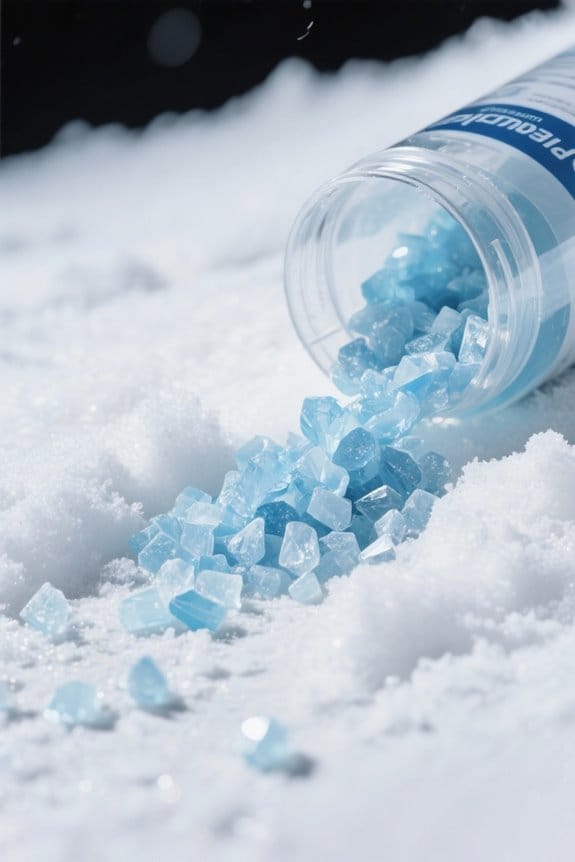
Chemical solutions can provide an effective way to tackle snow and ice buildup on roofs. Calcium chloride is a popular option that works in temperatures as low as -20°F, making it highly effective. Users often opt for pelletized forms, which can be safely placed in nylon stockings for controlled application. While salt-based deicers might seem convenient, they risk damaging asphalt shingles and vegetation due to their chemical composition. Targeted application is essential to minimize environmental impact and maintain chemical compatibility with roofing materials. It is advisable to consult a professional to prevent warranty issues. Protecting sensitive areas and rinsing off residues can help reduce negative effects on surrounding landscapes, ensuring the structural integrity of the home is maintained. Additionally, using a pet-friendly and environmentally safe ice melt can further enhance your approach to winter maintenance.
Maintaining Your Roof to Prevent Snow Issues
Maintaining a roof properly can prevent significant snow-related issues during winter. Regular roof inspections are essential. Homeowners should look for damaged or missing shingles and signs of wear around vents and chimneys. Checking that flashing is securely sealed helps keep water out. Gutter maintenance is equally important. Clear gutters of leaves and debris to guarantee proper water flow, and consider installing gutter guards to reduce clogs. Regularly examine downspouts to prevent backups and ice formations. Adequate attic insulation and ventilation also play a key role. These measures not only help to prevent ice dams but also contribute to the overall health of the roof. By staying proactive, homeowners can enjoy a safer, more reliable shelter during snowy winters. Additionally, effective sealing through window insulation kits can further enhance energy efficiency in your home during the winter months.
Preparing for Winter: Key Maintenance Tips
As winter approaches, homeowners should prioritize key maintenance tasks for their roofs. Proper gutter maintenance is essential to prevent ice dams. Clearing gutters and downspouts of debris guarantees water flows freely. Inspect roof valleys and secure flashing around vents and skylights to avoid leaks. It is also wise to trim overhanging branches to reduce the risk of damage from heavy snow. Additionally, checking attic insulation can help prevent heat loss and ice dams. Homeowners should verify their insulation is adequate. Regularly inspecting shingles and monitoring attic ventilation will further protect against winter’s harsh conditions. Completing these maintenance tasks creates a solid foundation for a worry-free winter, fostering a sense of belonging and safety within the community. Investing in quality snow removal tools enhances overall vehicle maintenance and safety during winter weather.
Professional Services for Safe Snow Removal
Once winter settles in, many homeowners face the challenge of snow accumulating on their roofs. Hiring professional services offers a safe and efficient option. These experts hold professional qualifications, guaranteeing that snow is removed without causing roof damage. Service pricing generally varies based on roof size and complexity. Hourly rates typically fall between $50 and $100. Flat fees for roof snow removal can range from $150 to $1,700, depending on factors like snow depth and pitch. Some services may require a deposit of $50 to $100 when booking. Choosing a professional helps prevent hazards associated with climbing slippery roofs and guarantees a thorough assessment of potential structural risks, benefitting homeowners seeking peace of mind in winter. Additionally, professionals often utilize roof rake snow removers to enhance safety and efficiency during the snow removal process.
Community Resources for Snow Assistance
Community resources for snow assistance are frequently available to help homeowners manage snow removal efficiently. Many municipalities offer senior programs aimed at individuals aged 60 and older, providing assistance with snow removal from driveways and sidewalks. Volunteers in local initiatives often support seniors and disabled residents, ensuring safe pathways during winter. Community councils maintain resources for snow removal, including information on financial aid or free services. Additionally, informal networks among neighbors can provide timely aid for those needing assistance. Building these connections encourages community support and lessens the burden during harsh weather. For more detailed information on available options, residents can contact local government offices or explore community organization websites. It may be beneficial to include a comprehensive first aid kit in your home for emergencies during heavy snowfall.
Emergency Procedures for Severe Snow Accumulation
Severe snow accumulation can threaten the safety and integrity of a roof. An effective emergency response involves continuous monitoring of snow loads during snowfall events. Early action is essential; snow removal should begin as soon as accumulation begins. Inspect roofs for stress indicators, like sagging or creaking noises, as these may signal a critical condition. Focus on drifted snow near changes in elevation or equipment mounts, as these areas require immediate attention. Maintain clear access points to roofs by removing ice and snow from ladders and hatches. For snow management, use long-handled plastic roof rakes from the ground to safely pull snow downward. Prioritize safety and teamwork to guarantee well-being during snow emergencies. Additionally, it is important to consider effective signal suppression in avalanche beacons, as this feature enhances search efficiency in emergency situations.
Education on Safe Snow Removal Practices
Snow removal from roofs requires careful attention to safety and the right tools. Homeowners should first conduct a roof inspection to assess snow thickness, ensuring they understand how much weight their roof can handle. Adjustable roof rakes are essential, allowing safe snow removal from the ground. Using tools with soft bristles can prevent damage to shingles. When removing snow, homeowners should work in layers and avoid heavy scraping to maintain roof integrity. Additionally, keep snow to a manageable depth of 1-2 inches to prevent ice dams and excess weight. Awareness of weather changes can help predict ice formation, ensuring timely action. Proper knowledge and tool selection make snow removal safer and effective.
Long-term Strategies for Winter Roof Management
To guarantee a roof remains safe and functional during the winter, homeowners should adopt long-term strategies for winter roof management. Regular inspections before and after winter can uncover vulnerabilities, such as damaged shingles or poor attic insulation. Using snow removal equipment, like a roof rake, helps manage snow loads effectively from the ground. Homeowners should also clean gutters to prevent blockages. Installing gutter guards can lower maintenance tasks. It is essential to engage professional roofers for annual check-ups, ensuring that issues are addressed promptly. A well-documented maintenance plan can enhance the roof’s lifespan and potentially save costs on major repairs. Being proactive will create a safe environment and contribute to the community’s overall well-being during the winter months.
Frequently Asked Questions
How Often Should I Remove Snow From My Roof in Winter?
Snow should be removed regularly during winter, especially after significant snow accumulation exceeds six inches. Implementing winter precautions guarantees safety and prevents structural damage, fostering communal awareness and encouraging neighborhood cooperation in maintaining safe environments.
Can Roof Snow Removal Be Done Safely Alone?
Roof snow removal can indeed be done safely alone, akin to orchestrating a delicate dance. By following essential safety tips and employing the right tools, individuals can achieve a harmonious balance between safety and effective snow management.
What Is the Best Temperature for Roof Snow Removal?
The best temperature for roof snow removal is around or above freezing, as warmer conditions reduce snow load weight. These temperature effects facilitate safer handling, ensuring easier removal and minimizing risks related to heavy snow accumulation.
How Do I Know if My Roof Can Handle Snow Load?
To determine if a roof can handle snow load, one must examine snow load indicators and roof material durability. Strengthen connections to thriving communities for expert advice, ensuring stability against nature’s icy burdens.
Are There Specific Roofs That Are More Prone to Ice Dams?
Certain roof designs, particularly those with low slopes or complex features, are more susceptible to ice dam formation. Roof material types like shingles heighten risk, while metal and steep pitches often mitigate ice buildup.


