As an Amazon Associate, we earn from qualifying purchases. Some links on this site are affiliate links at no extra cost to you. Our recommendations are based on thorough research and editorial judgment.


Understanding Trail Conditions: When You Need Snowshoes Vs Microspikes

Snowshoes are ideal for deep, soft snow, distributing weight to prevent sinking. They work best in fresh powder at higher elevations and cost between $100 to $300. Microspikes, priced around $60, are perfect for icy or hard-packed trails, offering traction on flat or gently sloped surfaces. When conditions change, carrying both gear types guarantees safety and adaptability. Understanding these differences helps outdoor enthusiasts choose the right equipment for winter adventures, leading to a safer experience ahead.
Key Takeaways
- Snowshoes are best for deep, soft snow (over 4 inches) and steep slopes, offering stability and preventing sinking.
- Microspikes excel on packed trails and icy surfaces, providing traction for gentle slopes and flat terrain.
- Check local trail reports for snowpack conditions to determine if snowshoes or microspikes are necessary.
- Snowshoes distribute weight for deep snow navigation, while microspikes are lightweight and ideal for unexpected icy patches.
- Carry both snowshoes and microspikes for adaptability in varying winter trail conditions.
Definition and Purpose of Snowshoes and Microspikes
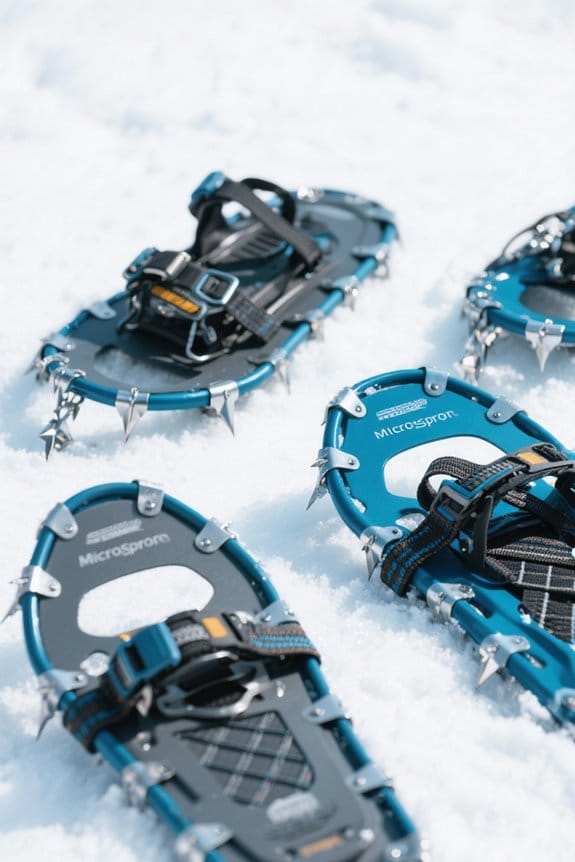
When exploring winter activities, understanding the definition and purpose of snowshoes and microspikes is fundamental. Snowshoes have a rich snowshoe history and are designed to distribute a person’s weight over a larger surface area. This prevents sinking into soft snow, allowing for efficient movement over winter landscapes. Traditionally made of wood and rawhide, modern designs use lightweight materials like aluminum. Additionally, using eco-friendly alternatives like snowshoes contributes to sustainability in outdoor recreation. Microspikes, on the other hand, are designed for icy terrain. Their small metal spikes enhance grip without altering walking mechanics, making them ideal for slippery trails. Compact and lightweight, microspikes offer significant microspike advantages for those traversing frosty paths. Both tools serve distinct purposes, ensuring safe and enjoyable outdoor experiences throughout the winter season.
Terrain Suitability for Snowshoes and Microspikes

Snowshoes and microspikes are designed for different winter conditions, making terrain suitability a key factor in choosing the right gear. Snowshoe designs are ideal for deep snow, especially on steep slopes, providing stability and preventing sinking. They perform best in fresh or mixed snow conditions and higher elevations where snow depth increases. In contrast, microspike materials excel on packed trails and icy surfaces, offering traction on flat or low-angle slopes. While snowshoes are bulkier, they are essential in soft, deep conditions. Microspikes are compact and easy to carry, making them suitable for shorter hikes where minimal gear is needed. Understanding these differences will help enthusiasts navigate winter trails safely and effectively. Additionally, selecting snowshoes with enhanced traction capabilities can significantly improve performance in varying snow conditions.
Assessing Trail Conditions for Gear Selection

How can hikers best assess trail conditions to select the right gear? Effective trail monitoring is essential for making informed decisions. Hikers should start by checking local trail reports or hiker networks for snowpack analysis. If trails are hard-packed or icy, microspikes provide excellent traction; they’re priced affordably, typically around $60. In contrast, deep, fluffy snow over 4 inches requires snowshoes to prevent postholing, with prices ranging from $100 to $300 depending on features. Additionally, consider the slope and trail grade. Microspikes are ideal for gentle slopes, while snowshoes distribute weight well but may hinder movement on steep inclines. Carrying both options allows for adaptability as trail conditions may change unexpectedly during the hike. Moreover, understanding thermal insulation levels can help hikers choose gear that best retains warmth in varying conditions.
Key Equipment Characteristics

Selecting the right equipment for winter hiking involves understanding the key characteristics of snowshoes and microspikes. Snowshoes boast a design prioritizing flotation, featuring a sturdy frame and adjustable bindings that enhance mobility in deep, unpacked snow. Their weight and bulk can make them less portable, impacting endurance on trails. Conversely, microspikes feature design variations with small spikes attached to a chain. They are lightweight and compact, making transport effortless. This gear is ideal for icy or packed snow conditions. While snowshoes excel in soft snow, microspikes shine on flat or low-angle slopes. Understanding these weight comparisons and equipment traits helps hikers choose the best option for varying winter terrains. Additionally, ensuring proper moisture-wicking capabilities in thermal base layers can enhance comfort during winter activities.
Skill Level Considerations for Using Each
For many hikers, skill level plays an essential role in choosing between snowshoes and microspikes. Beginners may face challenges with snowshoes due to their bulk and the need to manage flotation in deep snow. In contrast, microspikes offer a simpler, lightweight option that requires minimal technique modification. However, skill acquisition is important; effective use of microspikes demands timing and balance on icy surfaces. More experienced hikers can navigate varied terrain and use snowshoes effectively, appreciating their stability. Additionally, plan hikes according to fitness levels, as snowshoeing requires more endurance. Ultimately, knowing when to switch between snowshoes and microspikes is a skill developed through experience and practice, fostering confidence and camaraderie among fellow outdoor enthusiasts. Understanding material durability is crucial for selecting the right gear for different trail conditions.
Safety and Practicality of Gear Choices
When considering safety and practicality in gear choices, hikers should closely examine their environment and conditions. Microspikes offer reliable traction on icy and hard-packed snow, reducing slip-and-fall risk. They are lightweight and easily packable, making them ideal for unexpected icy patches. However, they are not for steep slopes, as longer crampons are advisable in such cases. Snowshoes shine in deep, soft snow, distributing weight and preventing exhaustion. They are necessary when snow exceeds four inches, though their bulkiness can increase tripping hazards. Investing in quality gear enhances user safety and performance, and options like snowboard mittens can also provide warmth and protection in cold conditions. Regular maintenance guarantees reliable use, and carrying both options allows hikers to adapt to changing conditions, assuring a safer, more enjoyable experience in the outdoors.
Tips for Transitioning Between Gear Types
Switching between snowshoes and microspikes often requires careful attention to trail conditions. When deciding on gear, consider snow depth and surface type. Snow over 4 inches usually calls for snowshoes, while packed snow favors microspikes. Carry both types to adapt easily to changing terrain. For interchange strategies, practice quickly removing and attaching microspikes. Store them compactly in your backpack for easy access. Always inspect your gear for wear and keep it clean to maintain efficiency. Choose interchange moments wisely, like during breaks or trail junctions. Wearing gaiters can help prevent snow from entering boots. Staying aware and prepared will enhance the experience and foster a sense of community among fellow adventurers. Additionally, understanding traction features is crucial for safety on slippery surfaces when using microspikes.
Frequently Asked Questions
Can I Use Snowshoes on Icy Conditions?
Snowshoes are unsuitable for icy trails due to inadequate snowshoe performance. Their design lacks the necessary traction for slippery surfaces, making microspikes a safer and more effective choice for traversing icy conditions and preventing falls.
How Do I Store Snowshoes and Microspikes Effectively?
Effective snowshoe storage involves keeping them dry, free from debris, and away from direct sunlight. Microspike care requires protection in cases, periodic checks for damage, and storing them loosely to maintain integrity and functionality.
Are There Specific Brands Recommended for Snowshoes or Microspikes?
Notable snowshoe brands include MSR for performance, Tubbs for beginners, and Atlas for versatility. For microspike options, Kahtoola and Hillsound are favored for icy trails, ensuring a reliable and enjoyable outdoor experience for enthusiasts.
What Additional Gear Should I Carry Alongside Snowshoes or Microspikes?
In addition to snowshoes or microspikes, one should carry essential clothing, including moisture-wicking layers, a waterproof jacket, and a hydration pack. This gear enhances comfort and safety, fostering a connected outdoor experience with fellow adventurers.
How Do I Maintain and Care for My Snowshoes and Microspikes?
Like a cherished companion, snowshoe maintenance and microspike care require regular attention. Cleaning after each adventure, inspecting for wear, and storing them properly guarantee they remain reliable partners on future trails, fostering a sense of belonging in nature.


