As an Amazon Associate, we earn from qualifying purchases. Some links on this site are affiliate links at no extra cost to you. Our recommendations are based on thorough research and editorial judgment.


How to Prepare Your Home for the First Snowfall of the Season

To prepare a home for the first snowfall, start with roof maintenance. Inspect for missing shingles and clear gutters. Prune trees to prevent limbs from falling. Check outdoor plumbing for leaks and use faucet insulation covers. Make certain your heating system has new filters for efficiency. Install weatherstripping to seal drafts. Stock up on snow removal equipment, such as shovels and ice melt. Following these steps will help guarantee safety and comfort this winter. More tips are available.
Key Takeaways
- Conduct a thorough roof inspection and repair any missing shingles or flashing to prevent leaks from snow accumulation.
- Clean and clear gutters to ensure proper drainage and prevent ice buildup that can damage your home’s foundation.
- Prep outdoor plumbing by insulating faucets, disconnecting hoses, and draining external valves to prevent freezing.
- Maintain heating systems by replacing filters and inspecting for repairs to ensure efficient operation during colder months.
- Stock emergency preparedness kits with water, non-perishable food, and essential winter supplies to stay safe during snowstorms.
Roof Maintenance Tips for Winter
As winter approaches, guaranteeing roofs are properly maintained is essential for preventing damage from snow and ice. Homeowners should conduct a thorough roof inspection at least once a year before the first snowfall. This includes checking for missing or cracked shingles and any signs of wear that could lead to leaks. Attention should also be paid to the flashing around chimneys and vents, as well as gutters, which must be clear and secure. Cleaning gutters helps prevent ice dam formation. It’s wise to engage a professional for an assessment during early fall—September to November—to identify issues early. Additionally, homeowners should schedule energy audits to identify additional areas for improvement. With these winter preparation steps, homeowners can protect their roofs and guarantee their homes remain safe and warm throughout the season.
Tree Maintenance to Prevent Damage

Proper tree maintenance plays an essential role in safeguarding homes from winter damage. Homeowners should prioritize tree pruning during the late dormant season, from November to April, to remove dead or damaged limbs. This reduces the risk of branch breakage under heavy snow. It’s advisable to use clean tools disinfected with a bleach solution to prevent disease spread.
Additionally, applying 2-4 inches of organic mulch around tree bases insulates roots and retains soil moisture during winter. Confirm mulch is a few inches away from the trunk to avoid moisture buildup. Regular inspections before the first snowfall can help catch mechanical injury or disease. Taking these steps confirms trees remain healthy and resilient throughout the winter months, as high-quality materials used in tree maintenance can enhance their durability against harsh weather conditions.
Preparing Outdoor Plumbing for Cold Weather

Preparing outdoor plumbing for cold weather is essential for homeowners seeking to avoid costly repairs. First, homeowners should conduct a plumbing inspection of outdoor faucets, looking for leaks or damage. Disconnect hoses to prevent freezing and store them indoors. It’s wise to close interior shutoff valves, allowing external valves to drain any remaining water. Consider using faucet insulation covers for added protection. For sprinkler systems, shut off the water supply and drain residual water from pipes and valves. Insulate exposed plumbing lines with foamed sleeves and check for any gaps regularly. Clearing outdoor drains and gutters is also vital to prevent ice buildup. Together, these steps help protect plumbing and guarantee a smooth changeover into winter. Additionally, having a collapsible snow shovel on hand can facilitate quick snow removal, ensuring outdoor areas remain accessible and safe.
Ensuring Energy Efficiency in Your Home

After confirming outdoor plumbing is protected for the winter, focusing on energy efficiency within the home becomes a priority. Homeowners can begin by installing energy efficient thermostats, which can save around 8% on heating bills. Setting thermostats to 68°F to 70°F helps conserve energy while maintaining a cozy environment. Additionally, using air sealing techniques, such as weatherstripping doors and windows, prevents cold drafts and loss of heat. Sealing gaps with caulk or insulation film can greatly boost energy efficiency. To further enhance warmth, insulating attics and walls is effective as well. Regularly checking for air leaks confirms continued savings and comfort during the winter months. These measures collectively help create a warm, welcoming atmosphere for all. Implementing window insulation kits can significantly enhance energy efficiency and reduce heating costs during colder months.
Essential HVAC System Maintenance
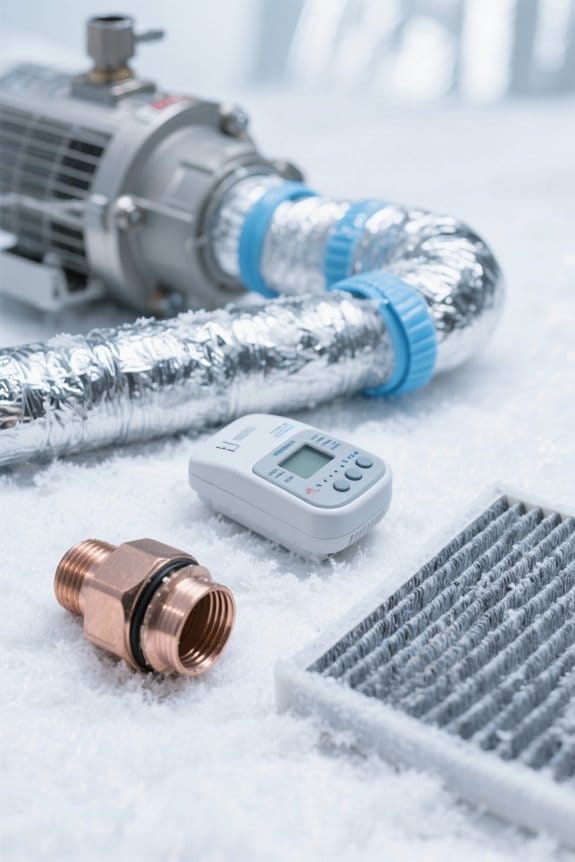
Maintaining a home’s HVAC system is essential for ensuring comfort during winter months. Homeowners should begin with regular HVAC inspections, ideally at the start of the season. Cleaning air filters monthly is vital, as it enhances airflow and efficiency. Next, inspect the furnace area, ensuring no debris blocks airflow. Thermostat settings must be confirmed for accuracy, while the pilot light in gas furnaces should be checked. For outdoor units, clear any leaves and debris, and cover the AC condenser to protect it from snow and ice. Additionally, having a comprehensive first aid kit available is crucial for addressing any potential emergencies during winter months. By focusing on these fundamental maintenance tasks, homeowners can prepare their HVAC systems for the winter, ensuring a warm and inviting atmosphere throughout the colder months.
Stocking Your Emergency Preparedness Kit
Stocking an emergency preparedness kit is important for any homeowner, especially in regions prone to severe winter weather. Families should store at least one gallon of drinking water per person per day, with a minimum three-day supply. Including water purification tablets or a portable filter guarantees access to safe drinking water if the supply runs out. High-calorie, non-perishable emergency meals such as energy bars, canned meats, and trail mix are essential. It’s wise to have comfort foods like chocolate to lift spirits during tough times. A manual can opener and extra bottled water for pets can enhance the kit’s usability. Regularly rotating stored items is key for maintaining freshness and making sure the family remains well-prepared during winter emergencies. Additionally, including comprehensive first aid gear is crucial for addressing injuries that may occur during winter-related activities.
Interior Preparation for Winter Conditions
Preparing the home’s interior for winter is just as important as guaranteeing an emergency plan is in place. Homeowners should inspect windows and doors for drafts, sealing them with weather stripping or caulk. Reversing ceiling fans to push warm air down enhances comfort. Proper indoor organization simplifies the season; decluttering entryways allows easy access to winter gear. It’s wise to have cleaning routines that address dust and grime that accumulate during colder months. Inspect heating systems to guarantee safety, and check smoke detectors for functionality. Remember to monitor humidity levels and consider using humidifiers to keep indoor air comfortable. Taking these steps can help create a warm, inviting space for family gatherings during the winter season. Additionally, having wide snow shovels ready for snow removal ensures homeowners can efficiently clear their driveways and walkways when the first snowfall occurs.
Regional Considerations for Winter Readiness
When winter approaches, regional differences in climate play a significant role in how homeowners should prepare their properties. In the Northeast and Midwest, where heavy snowfall and freezing temperatures prevail, homeowners should brace for potential ice dams. Tree limbs near the house must be trimmed to avoid damage during winter storms. In milder southern climates, sealing drafts around windows and doors can help retain warmth. Central Oregon residents must take similar precautions due to freezing temperatures. No matter the location, homeowners should verify their heating systems are ready for the cold. This includes routine inspections and filter replacements to extend system life. Additionally, ensuring that your home is equipped with insulated work gloves can provide essential warmth while performing outdoor tasks. Adapting to regional temperatures is essential for a safe and cozy winter experience.
Gutter Cleaning and Maintenance
Maintaining gutters is an essential step in preparing a home for impending snowfall. Clogged gutters can cause ice dams, leading to roof damage and costly repairs. Homeowners should conduct a winter debris assessment, removing leaves and twigs before temperatures drop. Flushing the gutters with a hose guarantees they are clear and functioning properly. Inspecting for cracks and loose sections is also critical. For added protection, consider gutter guards installation; these can greatly reduce the accumulation of debris and minimize future cleaning efforts. Regular maintenance helps protect the home’s siding and foundation from water damage. By investing time in gutter cleaning, homeowners can confirm their property remains safe and functional through the winter months. Additionally, ensuring proper freeze protection can help mitigate the risk of plumbing issues related to freezing temperatures.
Snow Removal Equipment and Supplies
Snow removal equipment is essential for keeping homes safe and accessible during winter months. Homeowners should consider various snow shovel options, such as lightweight plastic or durable metal blades. An ergonomic shovel design minimizes back strain while tackling snow. For larger areas, snow blowers offer efficient solutions, featuring options like self-propelled models that make removal easier. Key snow blower features include heated grips for comfort and adjustable chute controls for better snow management. Additionally, investing in ice melt and safety gear, such as gloves and goggles, helps prevent slips and guarantees safety. Furthermore, using poly blade snow shovels can enhance snow removal efficiency thanks to their lightweight and non-stick features. This thorough preparation allows families to enjoy the beauty of winter without the worry of snow accumulation affecting accessibility.
Checking Electrical Systems for Winter Safety
Properly checking electrical systems is crucial as winter approaches. Electrical panel inspections are imperative. Homeowners should inspect their panels for rust or corrosion, which can signal moisture issues. Breakers should be identified for unusual warmth or buzzing sounds. Clear labeling prevents confusion during emergencies.
GFCI testing must be conducted monthly in wet areas like kitchens and bathrooms. Verify GFCI outlets trip correctly; replace any that fail. Additionally, examine cords and outlets for damage. Loose or frayed cords pose fire risks and should be replaced.
Keeping smoke detectors functional is equally important. Test them monthly, and replace batteries seasonally. Being proactive about electrical safety not only helps guarantee a warm and safe winter but also cultivates peace of mind for every household.
Frequently Asked Questions
How Can I Prevent Ice Dams on My Roof?
To prevent ice dams, prioritize roof maintenance and insulation upgrades. Ascertain proper ventilation, seal air leaks, and regularly clear snow from the roof to create a welcoming and safe environment for all home occupants during winter.
What Are the Signs of Frozen Pipes?
Signs of frozen pipes include reduced water pressure, frost on pipes, and strange odors. Identifying these frozen pipe indicators allows homeowners to apply effective thawing techniques, ultimately ensuring their plumbing remains functional and secure.
When Should I Turn off Outdoor Faucets?
Ideally, outdoor faucets should be turned off two weeks before the expected frost, ensuring proper outdoor faucet maintenance. This proactive step serves as an essential winter water precaution for homes, particularly those with older plumbing systems.
How Can I Choose the Right Snow Shovel?
Choosing the right snow shovel involves considering shovel materials and sizes. Users should select durable materials for heavy snow and appropriate sizes for their height, ensuring comfort and efficiency while fostering a sense of community support when tackling winter challenges.
What Is the Best Way to Clear Snow From My Driveway?
With snowflakes dancing like confetti, a blend of manual and mechanical snow removal techniques guarantees efficient driveway maintenance. Starting early prevents compaction, while proper tools protect surfaces and reduce injury, fostering a welcoming home environment.


